
Last updated:
A joint account is a bank account shared by two people. Each holder gets equal access to the money and equal responsibility for what happens in it. Not every joint account works the same way, though. A traditional high-street joint account and an app-based one from a digital bank suit different situations, and opening either links your credit file to your co-holder for as long as the account stays open. This guide covers the types available, how the credit-score link works, who qualifies, how to open one, and a lighter alternative if you are not ready to merge finances fully. Already decided you want one? See our full ranked joint account comparison to compare providers side by side.
Contents
What is a joint account?
A joint account is a single bank account owned by two people. Each one gets equal access to the balance and equal control over how it is used. Couples, housemates and family members open them to manage shared costs such as rent, a mortgage or household bills from one place, instead of splitting every payment individually. Both holders can typically pay in, withdraw, set up Direct Debits and view the full transaction history, no matter who deposited the money. Access is equal, so is responsibility. Either holder can spend the full balance, and both are jointly liable for any overdraft or shared borrowing attached to the account. How it stacks up against the rest of the market is shown here: Best joint savings account.
What types of joint account are there?
There are two main types of joint account in the UK: traditional accounts from high-street banks, and app-based (digital) accounts from challenger banks. Both give two people shared access to one account. They differ in how you apply, how fast the account is set up, and what day-to-day money tools come built in. A dedicated article goes into the detail: NatWest Savings Account.
Traditional joint accounts
A traditional joint account is opened directly with a high-street bank such as Barclays, HSBC, NatWest or Santander, in branch, by phone, or through the bank's website or app. You do not need to already hold an individual account there first. Most providers let two people apply together from scratch. Traditional joint accounts usually offer the widest choice of overdraft facilities, in-branch support, and extras like cheque books, which suits holders who want the full range of a mainstream current account. We cover it in more depth here: NatWest Business Current Account.
App-based / digital joint accounts
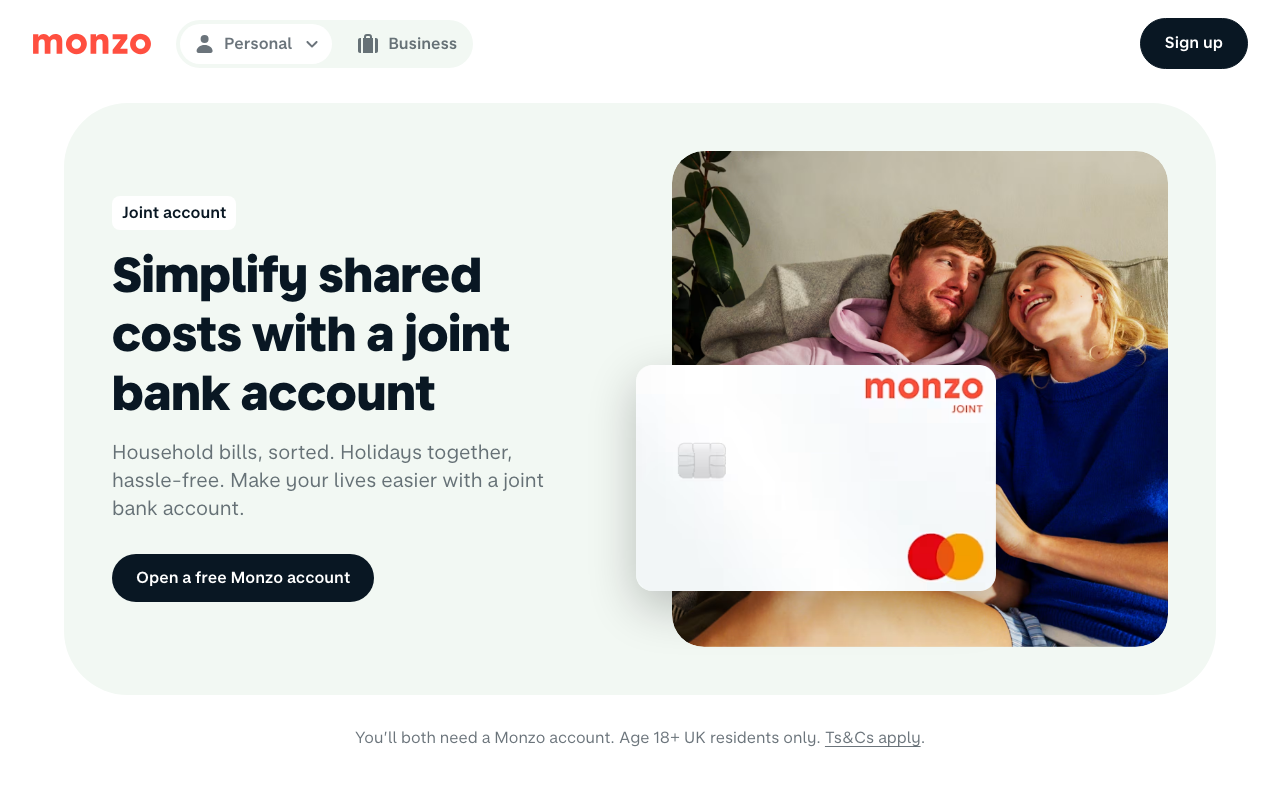
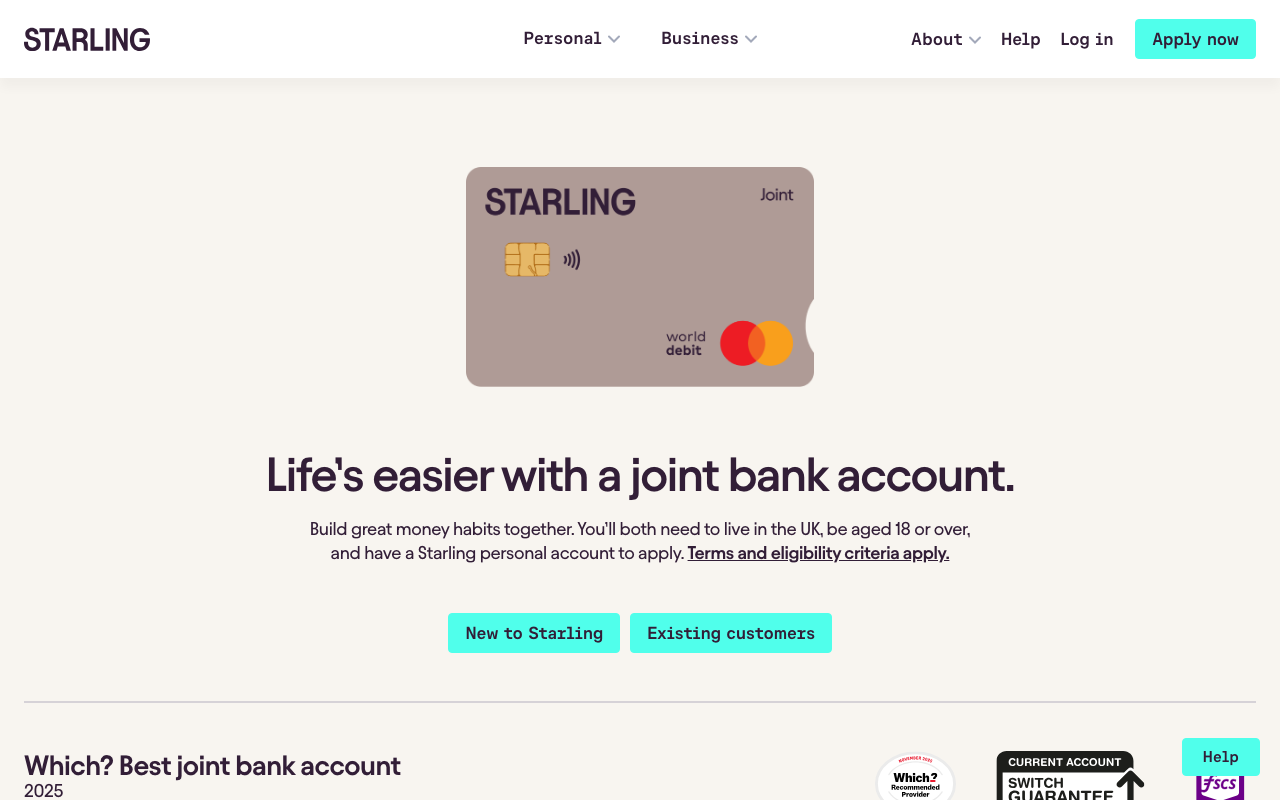
An app-based joint account comes from a digital-first bank such as Monzo or Starling, set up entirely through their mobile app. Both providers require each person to already hold an individual personal account before either can apply for the joint account. Starling even asks both holders to be in the same room, so the app can link the two devices. In return, digital joint accounts tend to set up faster and add spending notifications and in-app splitting tools, such as Monzo Pots or Starling Spaces. HSBC also runs a joint account through its mobile-first HSBC app alongside its branch network, sitting somewhere between the two categories. An overview of the Monzo alternatives is in a separate article.
| Type | Typical opening method | Typical features | Best for |
|---|---|---|---|
| Traditional joint account | Branch, phone, or online with a high-street bank; no existing personal account required | Cheque book option, in-branch support, wide overdraft facilities | Holders who want in-branch access and full overdraft facilities |
| App-based / digital joint account | Mobile app only; both holders usually need an existing personal account first | Instant spend notifications, in-app bill splitting or shared spaces, fast account opening | Holders who want fast setup and real-time spend visibility |
How does a joint account work?
A joint account works like a standard current account, except either holder can use it on their own and both are equally responsible for it. In practice, that means:
- Both holders get their own debit card linked to the same account and balance.
- Either person can pay in, withdraw, transfer money or set up Direct Debits without needing the other's sign-off.
- Both can see the full transaction history and statements, not just their own activity.
- Both are jointly and severally liable for any overdraft or borrowing on the account. Either person can be pursued for the whole amount, not half, no matter who spent it.
- Most banks credit-check both applicants before opening the account, and on any joint overdraft facility.
How does a joint account affect your credit score?
Opening a joint account creates a financial association between the two holders on their credit files at Experian, Equifax and TransUnion. Once that link exists, each holder's credit history can influence the other's future credit applications, because lenders may weigh a linked person's financial behaviour. This is not the same as merging your scores. You still have two separate credit files and two separate scores, but the link is visible to any lender who checks either file.
The link does not vanish the moment you close the account. It can stay on file indefinitely until one of you files a disassociation request with the credit reference agencies. That process typically takes up to 28 days, and can be refused while either of you still holds another active joint product together. Miss a payment on shared borrowing linked to the account, such as an agreed overdraft, and it can appear on both credit files for up to six years.
Choose your co-holder carefully. The link can outlast the relationship. Only open a joint account with someone whose money habits you trust, and file a disassociation request once every joint product between you is closed, not just the account itself.
What are the advantages and risks of a joint account?
A joint account makes shared costs easier to manage day to day. It also carries real financial and credit risks worth weighing before you apply.
Advantages
- Simplifies paying shared bills, rent or a mortgage from a single account instead of splitting every payment.
- Both holders see all spending in one place, which helps with budgeting together.
- FSCS protects deposits up to £120,000 per eligible person, per institution. A two-person joint account has combined protection of up to £240,000 if the bank fails.
- Either holder can manage the account alone, useful if one person is unavailable or unwell.
Risks
- Both holders are liable for the full overdraft or any joint borrowing, not just their own share, even after the relationship ends.
- Either holder can withdraw or spend the full balance without asking the other first.
- The credit-file link the account creates can affect your ability to get credit independently, and can outlast the account itself.
- Spending disagreements are harder to resolve once money is fully shared, since neither holder has exclusive control.
Who is eligible to open a joint account?
To open a joint account in the UK, both applicants generally need to:
- Be 18 or over.
- Be a UK resident, or meet the specific provider's residency rules.
- Provide proof of identity, such as a passport or driving licence, and proof of address for each holder.
- Pass the bank's credit check. Most providers assess both applicants before approving the account or any linked overdraft.
Digital providers sometimes add a step. Monzo and Starling both require each person to hold an individual personal account with them first, before either can apply for the joint account together. If it is not the right fit, we compared the strongest Starling alternatives.
How do you open a joint account?
- Choose between a traditional joint account and an app-based one, based on whether you want in-branch support or a fully mobile setup.
- Check both holders meet the provider's eligibility rules, including any requirement to hold an individual account first with a digital bank.
- Gather identity and address documents for both applicants.
- Apply together in branch, by phone, on the provider's website, or in the app. Digital banks generally need both people to complete the application from their own devices.
- Pass the provider's credit check on both applicants, covering the account and any joint overdraft facility.
- Once approved, set up Direct Debits, standing orders and any shared budgeting tools such as Pots or Spaces.
Can you split money without opening a full joint account?
Yes. Monzo Pots and Starling Spaces let you ring-fence and organise money for bills inside your own individual account, without opening a joint account or linking your credit file to anyone else's. Monzo and Starling also offer bill-splitting tools, such as Monzo Split, that let you request or track shared payments from friends or a partner directly in the app, with no shared account required.
This route suits people who want to split specific costs, such as rent or a household bill, without taking on joint and several liability for an overdraft. If you decide later that you do want the full shared access of a proper joint account, our ranked joint account comparison scores providers side by side.
What happens if you switch, close, or remove a holder from a joint account?
A joint account follows the same rules as an individual current account when it comes to switching, closing, or changing who is on it. Most requests need both holders to agree.
Switching a joint account
You can switch a joint account to a new provider through the Current Account Switch Service (CASS), run by Pay.UK. CASS guarantees your account, balance and payments, including Direct Debits, move to the new provider within 7 working days. If something goes wrong, the new provider must refund any interest lost or charges incurred because of the delay. Both holders typically need to agree to and authorise the switch.
Removing a joint holder or closing the account
Most banks require agreement from both parties to remove one holder or close the account, since each has equal legal ownership. If you cannot agree, for example after a separation, the bank may freeze the account or ask for both signatures before releasing funds. Contact your provider directly to understand its specific process. Once a holder is removed or the account is closed, file a credit-file disassociation request separately. Closing the account does not remove the financial link from your credit report on its own.
Joint account FAQs
What happens to a joint account if the relationship ends?
The account and any money in it stay jointly owned until you and your co-holder agree how to divide it and either remove one holder or close the account. Both of you stay liable for any overdraft or shared debt until it is repaid, even after separation, so agree a plan with your bank as early as you can.
What happens to a joint account when a holder dies?
Most UK joint accounts are held as "joint tenants". On the death of one holder, the funds pass automatically to the surviving holder by right of survivorship, without needing probate, once the bank has seen the death certificate. Funds passing to a surviving spouse or civil partner are exempt from Inheritance Tax. If the surviving holder is not a spouse or civil partner, the deceased's share may still form part of their estate for tax purposes.
Can you have more than one joint account?
Yes. There is no legal limit on how many joint accounts you can hold, whether with the same co-holder or different people, as long as each application separately meets the provider's eligibility and credit-check requirements.
Can you remove yourself from a joint account without the other holder's agreement?
Generally, no. Because both holders have equal ownership, most banks require agreement from both parties before removing a holder or closing the account. If you cannot reach agreement, contact your provider directly. Some banks have a specific process for disputed joint accounts.